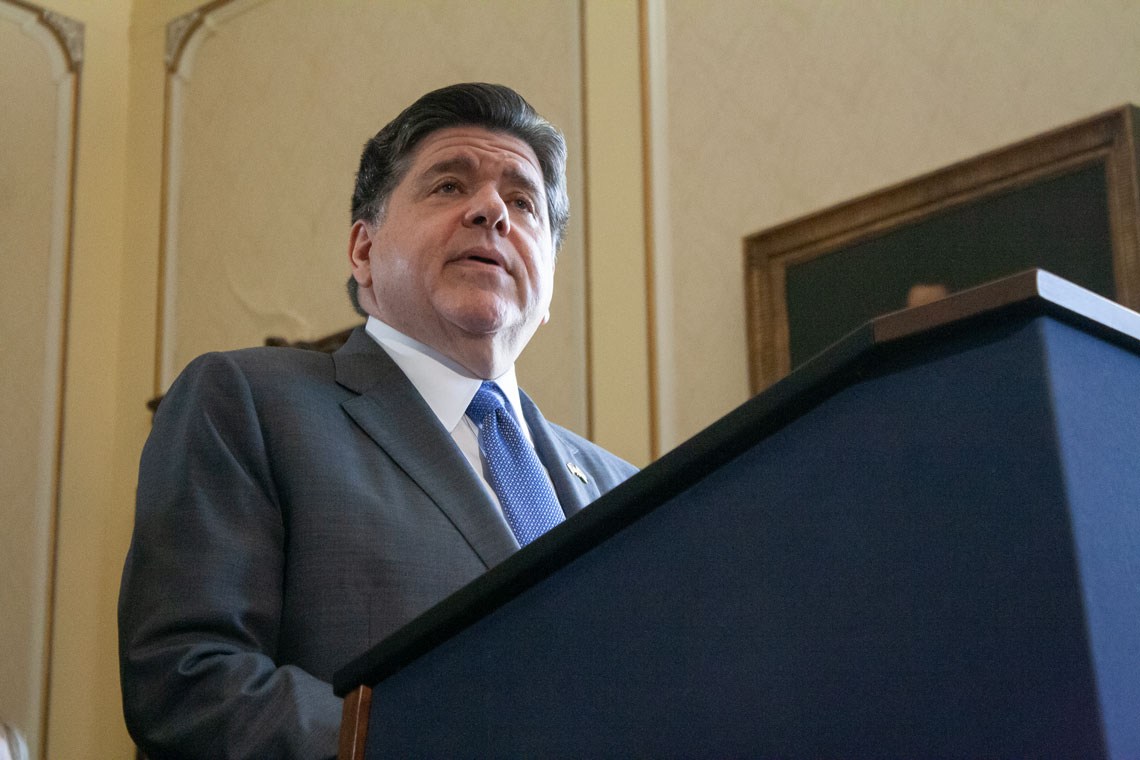
CHICAGO — In a surprise move, Gov. JB Pritzker announced Friday that he is putting a pause on all new state tax incentives for data centers and calling on lawmakers to pass new data center reforms during the fall veto session.
The governor has directed the Illinois Department of Commerce and Economic Opportunity to pause all new agreements starting July 1, fulfilling a proposal he made during his budget address earlier this year. The data center tax incentives have been in place as part of bipartisan legislation signed by Pritzker during his first year in office.
From 2020-24, there were 27 data centers that benefited by more than $983 million from these tax incentives, according to a state report.
In his announcement, the governor cited growing impacts on energy affordability and water resources.
“Illinois has an opportunity to continue leading in technological innovation and economic growth, but we also have a responsibility to protect working families and local communities as the data center industry rapidly expands,” Pritzker said.
“I am directing my administration to pause the processing of data center agreements while we continue working with the General Assembly and stakeholders on a comprehensive framework that protects affordability, safeguards our natural resources, and ensures responsible growth across Illinois.”
The move comes after lawmakers failed to pass House Bill 5513, known as the POWER Act, by the spring session deadline on May 31, following months of committee conversations and advocacy from environmental groups.
The bill would have required data centers to pay for and supply their own renewable energy, track and report water usage and enter community benefits agreements with the municipalities where they’re based. After the bill failed to pass, lawmakers said negotiations would continue over the summer.
Advocates earlier lamented a ‘lack of engagement‘ from Pritzker on supporting the bill.
Read more: POWER Act data center regulation won’t move forward this spring | Glock ban, prescription drug board among measures that stall in final days
When it was clear the bill wouldn’t be ready for prime time by the spring deadline, lawmakers from both chambers sent a letter to Pritzker calling for a tax credit pause.
“We believe the responsible course of action is to pause the data center tax credits and exemptions in the FY 2027 budget until common-sense guardrails are in place,” they wrote in the letter, obtained by Capitol News Illinois. “It is not only fiscally irresponsible, but also unconscionable to continue to provide millions of taxpayer dollars to Big Tech corporations harming our climate, straining our grid, and making electric bills unaffordable for working families.”
However, House Speaker Emanuel “Chris” Welch, D-Hillside, told Capitol News Illinois earlier this week that the pause on data center credits did not have the support of the Democratic caucus to get through session, saying “not only did it struggle, it wasn’t even close.”
“Now, let’s be clear, we certainly hear people’s concerns about data centers. We’ve had numerous hearings about them. I represent parts of DuPage County, so I hear those conversations about noise, water consumption, and energy costs,” Welch said. “I know how hard our friends in the environmental energy space are working on this very topic. They’re complex issues that just don’t get done right away.”
Resource strain
Data centers have already put a major strain on energy infrastructure, driving up demand and prices for regular customers — and many more are seeking access to Illinois’ grid.
Actual and projected demand from the data centers raised costs by $13 billion over the past two energy auctions on the PJM interconnection, an electric grid that provides energy to 13 states, including northern Illinois.
A February report from the Union of Concerned Scientists found those costs could increase by another $37 billion in Illinois alone over the next 25 years.
Those rising supply costs have added an average of $12 per month to residential customers’ bill over the last four years, according to ComEd CEO Gil Quiniones. It would have been even higher, around $16 per month, absent ratepayer relief built into the state’s 2021 landmark climate bill.

Labor calls for ‘pause on pause’
Organizers from Climate Jobs Illinois and the Illinois AFL-CIO called Pritzker’s tax credit pause “shortsighted” and called on him to “pause his pause.”
The tax incentive legislation required data center owners and operators to require their contractors to enter into approved project labor agreements to qualify for the benefits.
In a joint statement, the labor leaders accused Pritzker of issuing an order “to generate headlines, rather than practical results.”
“This pause does nothing to lower utility bills, protect the grid, or advance clean energy,” they wrote. “Instead, it will send billions of dollars in investment and thousands of union jobs to Indiana, Kentucky, and Ohio — states that sit on the same electrical grid, where those data centers will be built anyway, just without Illinois workers protected by nationally leading labor standards and without the clean energy requirements we’ve collaboratively fought to establish here.”
Other legislative proposals
In addition to ordering a pause on the tax incentives for data centers, the governor proposed six other principles for reform.
Pritzker urged lawmakers to work with consumer advocates, labor organizations and environmental stakeholders to pass legislation in the veto session that would: require data centers to pay for the costs of their energy and water demand, require them to support the generation of new renewable energy, to track and report water use, to adhere to air quality standards and to enter agreements with the communities that host them.
He also advocated for legislation that would allow utilities to prioritize power to residential and regular business customers in times of high energy demand.
“Data centers should temporarily go dark when the grid is strained to ensure reliable electric service for Illinoisans,” the proposal said. “Data centers that don’t supply their own clean energy could have their electric service interrupted when the grid is strained so Illinoisans’ lights stay on.”
ComEd CEO Quiniones told Capitol News Illinois in a recent interview that the utility also sees interruptible service for data centers as part of the solution to protecting energy affordability, along with more deployment of solar power and battery storage — both elements of a major energy reform package Pritzker signed at the start of this year.
Consumer and environmental advocates applauded the governor’s announcement and said they expected to continue conversations with lawmakers.
Abe Scarr, director of the Illinois Public Interest Research Group said “the devil is in the details” but that the organization supported the “direction” of the framework. Illinois Environmental Council CEO Jen Walling also cheered the news.
“We’re thrilled to see Governor Pritzker’s comprehensive framework to address the growing impact of data centers on our energy, water resources, and local communities,” Walling said. “We look forward to working with Governor Pritzker, state lawmakers, and other stakeholders toward our common goals: holding data centers accountable for their outsized impact on our natural resources and communities while prioritizing fairness, transparency, and Illinois’ clean energy future.”
Ben Szalinski contributed reporting to this story.
Capitol News Illinois is a nonprofit, nonpartisan news service that distributes state government coverage to hundreds of news outlets statewide. It is funded primarily by the Illinois Press Foundation and the Robert R. McCormick Foundation.



Leave a Reply