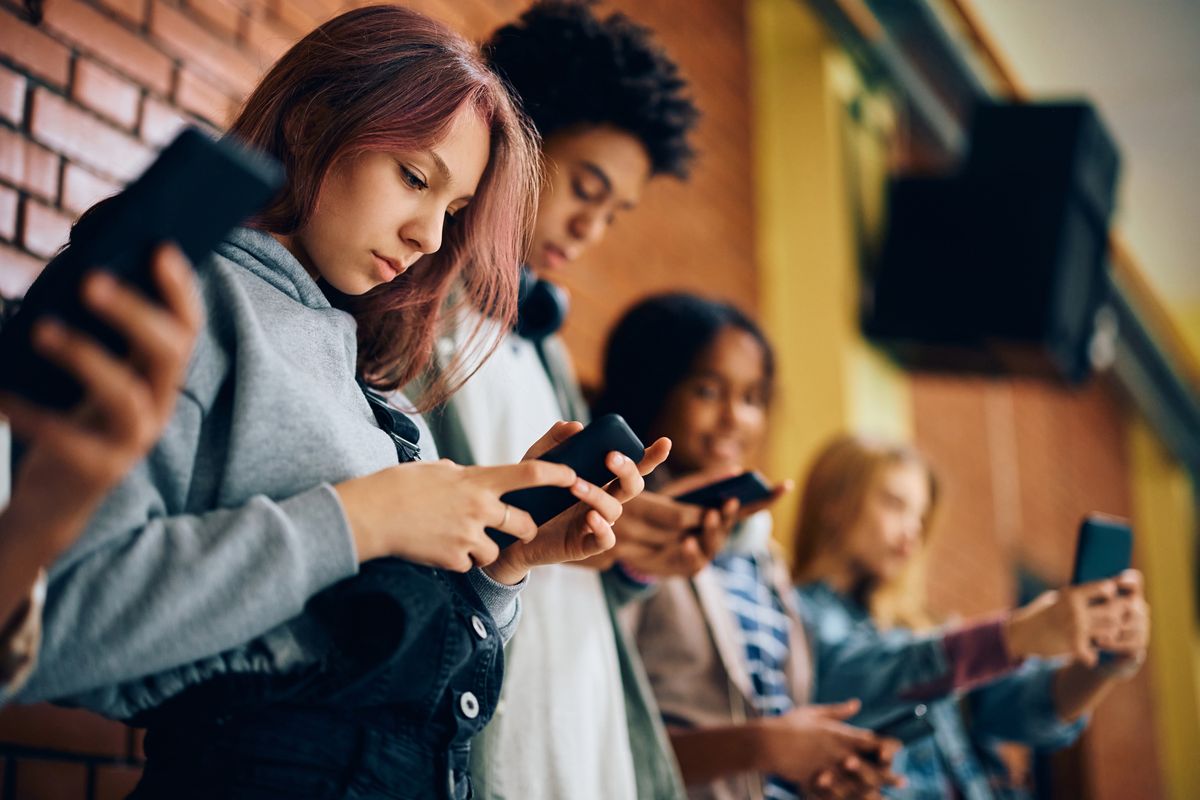
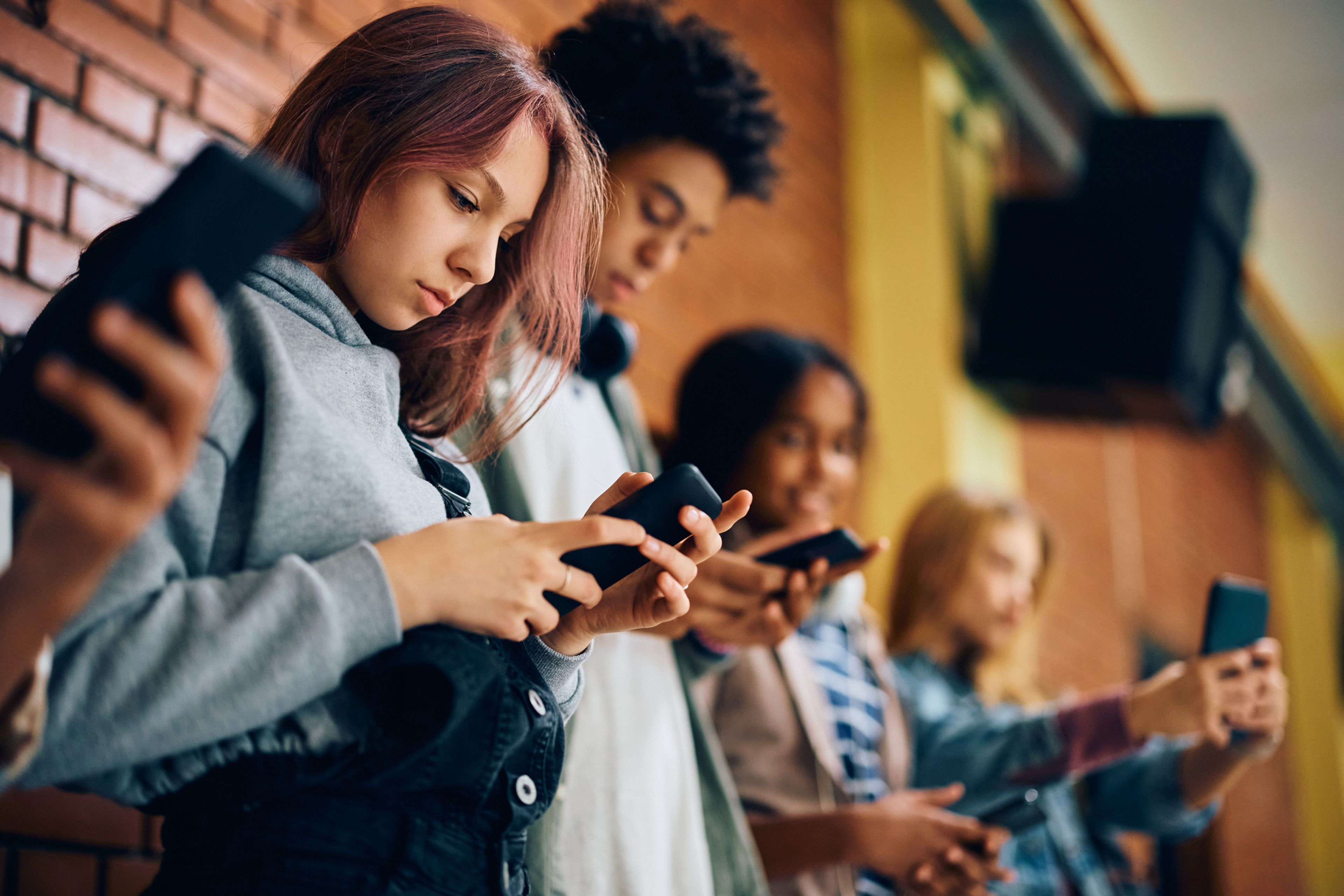
High school students using their smart phones in a hallway.iStock/Drazen Zigic
Sign up for Chalkbeat Chicago’s free daily newsletter to keep up with the latest news on Chicago Public Schools. This story was originally published by Chalkbeat. Sign up for their newsletters at ckbe.at/newsletters
Illinois is set to join a growing number of states that have barred cellphone use in the classroom.
Just as the Illinois General Assembly reached its deadline to wrap up its legislative session Sunday, the state Senate passed legislation that would largely restrict cellphones in Illinois schools. The legislation would go into effect for the 2027-28 school year, meaning school districts will have a year to plan before the restrictions are implemented.
The bill now heads to Gov. JB Pritzker, who has been a vocal advocate for limiting cellphone use in the classroom. It’s quite the turnaround in the Illinois state legislature, which failed to pass the bill in the state House of Representatives despite unanimous Senate approval during last year’s session.
Cellphones aren’t the only devices the bill bars from the classroom — tablets, laptops, gaming consoles, and smart watches are also banned. School-issued devices are exempt from the ban.
These broad restrictions aim to improve students’ academic performance by removing the distraction of what the bill calls “wireless communication devices,” proponents say. Barring them from classrooms could also “strengthen friendships and human interactions, and minimize bullying,” said Jessica Handy, executive director of Stand for Children Illinois.
The cellphone ban wasn’t the only legislation taking aim at children’s device usage that lawmakers passed this week. Another bill heading to Pritzker’s desk outlines limitations on social media platforms’ algorithms to protect children’s privacy. Both bills received bipartisan support from state lawmakers — something Pritzker said underscored the urgency of addressing the effects of cellphones on children.
“We’re giving children more classroom focus and a better education by banning kids’ use of cellphones during the school day from start to finish,” Pritzker said at a Monday news conference.
Research on the effectiveness of banning cellphones in schools is still preliminary, but results have been largely mixed. An April study published by the National Bureau of Economic Research showed a reduction in phone usage in schools with storage pouches for phones, but also found a minimal impact on student test scores or attendance.
Thirty-five other states have enacted legislation that bans or limits cellphone use in the classroom over the past few years, according to Ballotpedia.
Some changes from last year’s version of the bill include exceptions to ensure student safety, and limits on punitive measures against children who violate the bans. For example, after members of the legislative Black Caucus and Stand for Children expressed concern that students of color could be disproportionately disciplined, lawmakers added a section disallowing suspensions, expulsions, and fines against students who violate their district’s policy.
Several other exceptions are also folded into the legislation. Devices can be exempted from the policy if:
- A healthcare professional has determined it is medically necessary.
- It is used for an Individualized Education Program, which outlines accommodations for students with disabilities.
- The student is a caregiver responsible for a family member.
- An English language learner uses it for translation.
- A school staff member has allowed the use of the device.
- An emergency occurs.
- A school district allows usage during high school lunch breaks and periods between classes.
Over the next year, school districts must figure out how to store students’ restricted devices, because the bill doesn’t specify how schools must do so. If a device “stored in good faith” is damaged, school staff cannot be held liable, according to the bill. Some organizations such as the Illinois Federation of Teachers previously seemed hesitant about storage guidance, specifically what it might cost schools to implement.
The State Board of Education will provide a template for school cellphone policies by September. Feedback from local teachers unions is required, and student input is encouraged to help districts develop their policies.
Once the policies go into effect, parents can find their school’s rules on their district website or student handbook.
Makiya Seminera is a reporter covering how the state and federal government affect education in Chicago and across Illinois. Contact Makiya at mseminera@chalkbeat.org.
Chalkbeat is a nonprofit news organization covering public education.



Leave a Reply