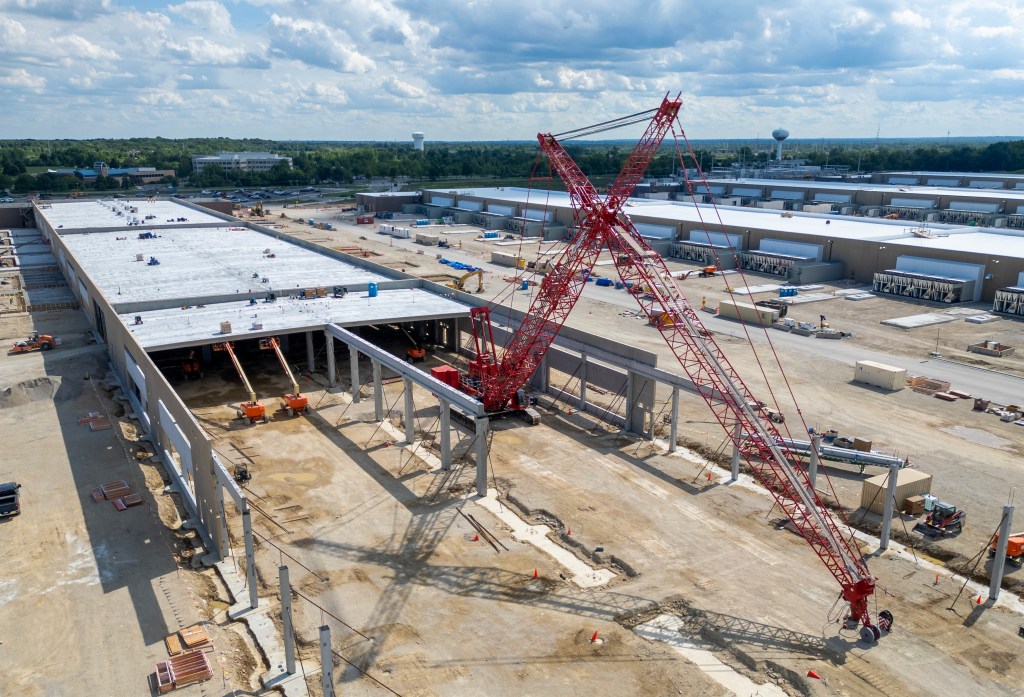
SPRINGFIELD — In lieu of statewide regulations, a growing number of Illinois cities and counties are telling data centers to come back later or adhere to new regulations.
In Aurora, what began as a 180-day moratorium ended with city officials bringing the regulatory hammer down on data centers after many community members complained about excessive noise, utility bills and environmental concerns stemming from the city’s existing facilities.
Nine months removed from the September moratorium, Aurora’s data centers are having to play by new rules. Restrictions on where facilities can be built and updates to zoning rules to give the city approval power over new developments. Strict noise emission, water efficiency and energy efficiency standards for new data centers. Mandatory annual reporting of energy use, water use, noise levels and the storage of biometric data for all data centers, including those already built.
“My administration is about putting people and planet first, so it’s making sure that the lights always get turned on for residents of Aurora, instead of seeing the power stripped away for data centers,” Aurora Mayor John Laesch said. “It’s good news that other municipalities and counties are taking action on this.”
So far, at least six counties and nine cities in Illinois have approved data center moratoriums or regulations. Since May, Bloomington, Normal, Effingham, Bourbonnais, Carbondale, Logan County and Lake County have implemented data center moratoriums ranging from a six-month ban to a whole year. McLean County took a stronger approach in June, requiring existing data centers to document their electrical consumption and mandating data center proposals to identify potential impacts on local infrastructure, emergency services and utilities.
Much of the blowback against data centers stems from concerns about the facilities’ energy and water use amid rising utility costs.
Without regulations in place, advocates and local officials worry data centers will strain the electrical grid and deplete Lake Michigan and rural well water faster than rain, runoff and groundwater can replenish them. Data centers already account for 5.4% of Illinois’ electrical consumption and that demand is expected to balloon by 133% by 2030, according to the U.S. arm of the International Energy Agency. At the same time, electric costs for ComEd customers in June have jumped 12%, while prices for Ameren customers downstate rose by nearly 30%, according to the Citizens Utility Board, a utility consumer watchdog group.
Lori McKiernan, a member of the Coalition for Springfield’s Utility Future and the Sierra Club, said the public deserves to have a voice in data center development.
“People are upset with the lack of transparency around these projects. They feel like backdoor deals are being made before the public is ever aware they’re happening,” McKiernan said. “Many people feel like the promised benefits with the tax revenues and the jobs don’t outweigh the negative impacts of these projects.”
To meet the growing demand for digital infrastructure and artificial intelligence, Brad Tietz, director of state policy for the data center lobbying group Data Center Coalition, said data center development is a necessity. However, Tietz admitted the industry can no longer fly under the radar as it had in years past.
“There is a spotlight on us now, and it’s incumbent upon us, I think, to be better at early and proactive community engagement, as well as getting out the facts of the project,” Tietz said.

While the industry faces growing public pressure, Tietz said data centers help the state and local communities. Data centers generated $2.6 billion in local and state tax revenue in 2024, according to the Data Center Coalition. Those taxes and the construction jobs created by data centers directly benefit the public, Tietz argued. He also said pinning the blame on data centers for rising utility bills was unproductive and that inflation and Illinois’ insufficient energy generation pose a larger challenge to electrical costs.
The concerns around water, noise and electricity are what motivated Champaign County to institute its own one-year moratorium on data centers, said Emily Rodriguez, Champaign County Board vice chair. While the moratorium is in effect, Rodriguez said the board is looking into a data center regulation policy similar to Aurora’s.
Still, advocates and officials like Rodriguez acknowledge that local governments can’t be the only group taking action on data centers. Rodriguez said their moratorium can’t stop a data center from moving in next door and that county moratoriums only apply to unincorporated land outside of city borders. She said state lawmakers need to pass regulations that apply statewide.
“The more that we investigate the issue, the more we encounter at the local government level how little authority we have to enforce regulations,” Rodriguez said.
The legislature’s most high-profile data center regulation piece, the POWER Act, would have established strong water and energy use standards, but the legislation never received a vote in either chamber. Although Gov. JB Pritzker issued an executive order on June 5 temporarily pausing applications for the state’s data center tax credit program, that order does not prevent new data center development or impose regulations.

While lawmakers may revisit the POWER Act during the November veto session, many city and county officials say they can’t afford to wait. Laesch said other cities have reached out to Aurora’s sustainability department to inquire about its data center regulations. Macon County is set to vote on a one-year moratorium within a month.
“When the State Legislature failed to pass the POWER Act, they left local governments to fight big tech armed with a spork,” Rodriguez said in an email.
Last week, Pritzker indicated that the General Assembly could take up the issue again when it convenes this fall after the November general election.
“We’re going to address the issue, I hope, in the veto session. We have the authority to decide what process we’re going to use in order to go through those tax credits,” Pritzker said when asked last Monday about the authority he had to pause processing new tax credits for data centers, adding that “this is not a moratorium on data centers.”
Data centers need to “pay up,” Pritzker added, saying the state needs to pass laws to make sure they bring their own power and recycle water, among other regulations.
Tribune reporter Olivia Olander contributed.



Leave a Reply