SPRINGFIELD — Bills expanding privacy for abortion medical records and access to birth control services passed in the final days of the General Assembly’s spring session.
The bills had strong support from abortion advocates who provide care for Illinoisans and nearly a quarter of the 142,000 people who have had to leave their home states for abortion services, according to data from the Guttmacher Institute, a nonprofit organization that researches abortion policy.
The first measure, House Bill 5295, is an initiative from the governor’s office and would create the Reproductive Health Privacy Act. It would require the separation of information about abortion services or diagnoses of gender dysphoria from a patient’s digital medical records if a patient chooses.
Access to those records would be restricted for out-of-state entities and could only be shared in certain circumstances and with a patient’s consent. The information would not be deleted, only shielded.
Senate lawmakers on Saturday passed the bill with a vote of 38-19. The House passed the bill Sunday with a vote of 73-39.
Gov. JB Pritzker said in a statement that he looks forward to signing the bill “to fortify the protections around choice and consent, and that anyone receiving safe, legal abortion care here will not be criminalized.”

“The surest way Illinois can protect our residents and their reproductive records is by requiring health information exchanges to implement new policies that keep sensitive information out of bad actors’ hands,” Villanueva said in an emailed statement.
Senate Republicans raised concerns about doctors being able to treat patients without knowing whether they’d received abortions.
The measure only applies to networks that provide software that shares electronic health information and how they handle patient data, so it doesn’t address medical malpractice if a doctor were somehow unable to treat the patient; those doctors would not be held liable.
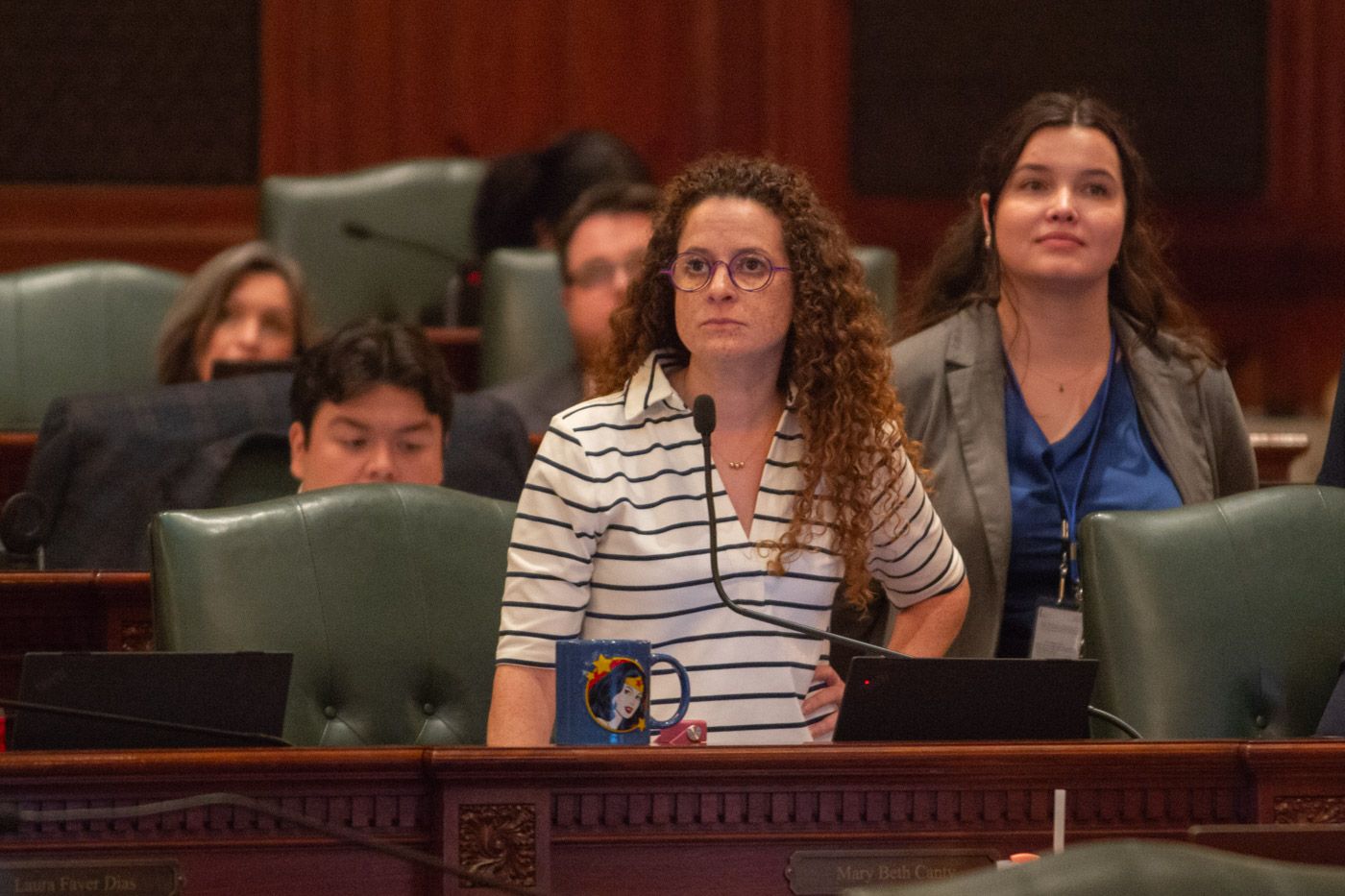
In April, House sponsor Rep. Mary Beth Canty, D-Arlington Heights, said medical experts who weighed in on the bill didn’t raise any concerns and they confirmed what kinds of information is necessary for doctors.
“Illinois has become an island of access for vital healthcare, especially for abortion and gender-affirming care. The Reproductive Health Records Privacy Act ensures that anyone receiving care in our state will not have their sensitive medical records shared without their consent. As other states move to criminalize this essential healthcare, Illinois is taking concrete steps to strengthen protections for both patients and providers,” Canty said in a statement.
The bill initially passed the House 73-34 in April along party lines and had to come back for an amendment.
Research suggests treatment for rare abortion complications like excessive bleeding or infection wouldn’t be significantly different from how medical workers would treat those conditions if they happened for another reason.
“To also speak to this, nothing in this bill precludes patients from verbally sharing this information with providers in that moment,” Villanueva said. “And I’ll be remiss to say that ER doctors and providers do this work on (an) every single day basis when they don’t have a full workup of a patient.”
Sen. Jil Tracy, R-Quincy, questioned whether doctors in states where abortion is banned would knowingly violate patient privacy laws by reporting the patient to the police.
But that does happen, usually for patients who manage the abortion on their own using medication. Oftentimes, those reports happen because abortion bans are vague about reporting requirements for healthcare workers, and those workers err on the side of caution because the penalties for violating abortion bans are steep.
Another potential motivator for physicians reporting patients is abortion stigma, the belief that abortion is morally wrong or unacceptable, and interpretations of laws associated with the disposal of fetal remains.
Rep. Bill Hauter, R-Morton, a physician, called the bill “unworkable and unnecessary” during final House floor debate on Sunday.
“This bill fundamentally misinterprets and mischaracterizes what the medical record is for — a private, protected communication between healthcare professionals to take care of patients,” he said.

“What we’re trying to do with this bill is, we’re trying to modernize antiquated Illinois statute and make it clear that minors may consent to these services,” said Rep. Dagmara Avelar, D-Romeoville.
Under existing law, young people can consent to birth control without a parents’ consent but only under specific circumstances, such as if they’re married or already a parent, among other qualifications.
SB 3341 expands that ability to all Illinois minors and follows medical evidence about that minors’ access to birth control reduces rates of teenage pregnancy.
On Wednesday, the House passed Senate Bill 3341 with a 73-38, party line vote. The bill earlier passed the Senate with a vote of 37-19 and now heads to the governor’s desk for his signature.
“We commend the Illinois General Assembly for trusting the medical community to set up-to-date, evidence-based guidelines that better meet the needs of young people today,” Adrienne White-Faines, president and CEO of Planned Parenthood Illinois Action, said in a statement following its passage.
Republicans on the floor opposed the bill because they said it violated parents’ rights to direct the care of their children, but Avelar said the bill doesn’t prevent parents and their children from talking about birth control.
“We know that many young people do involve a parent when it’s safe to do so, but the law also has to work for young people for whom that is not safe or possible,” she said.
Lawmakers and advocates have pointed out that children in foster care or in abusive situations may not have access to birth control, which can be used for reasons other than preventing pregnancy.
House Republicans also argued that young people having birth control as teenagers may lead to fertility trouble later in life, but no scientific studies have found a long-term impact on fertility if a person uses hormonal birth control as a teenager.
“More and more we are seeing birth control being stigmatized and suffering from misinformation,” Margot Riphagen-Dunn, President and CEO of Planned Parenthood Great Rivers Action said. “But Illinois has long been a leader in upholding reproductive rights, and protecting access to birth control is fundamental to that fight.”
Capitol News Illinois is a nonprofit, nonpartisan news service that distributes state government coverage to hundreds of news outlets statewide. It is funded primarily by the Illinois Press Foundation and the Robert R. McCormick Foundation.



Leave a Reply