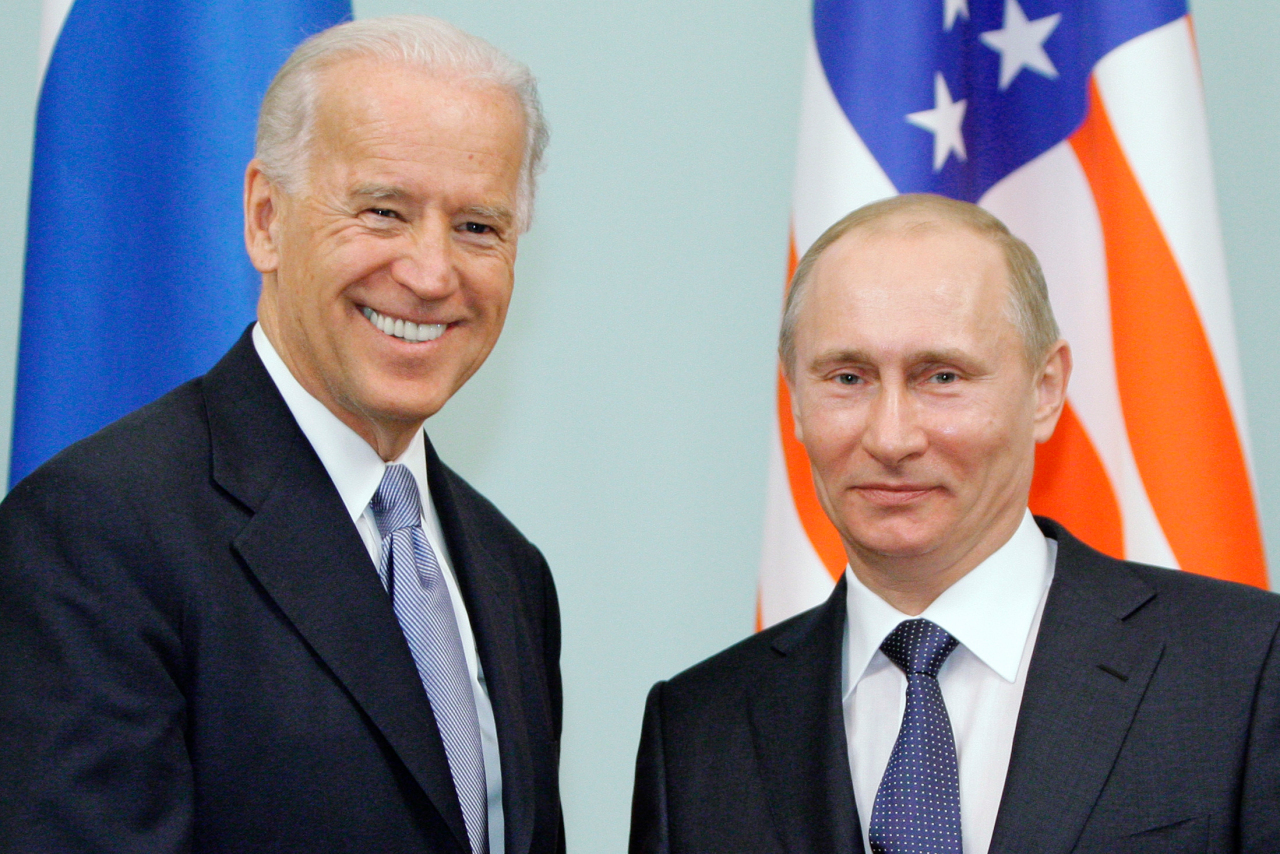
Washington (AP) — At a low stage of US-Russian relations, President Joe Biden and Russian President Vladimir Putin seem to have broadly agreed on at least one thing. The first face-to-face meeting on Wednesday is a new era of arms control.
Whether that leads to actual arms negotiations is another matter, complicated by the sour relations and criticisms of each country that they are fooling past arms treaties. The arms control structure has been frayed, especially in 2019, by the abandonment of the Intermediate-Range Nuclear Forces Treaty (first Washington, then Moscow), which has governed all classes of missiles for over 30 years.
The Trump administration has also withdrawn the United States from the Treaty on Open Skies, which allowed surveillance flights of military installations in both countries. Last month, the Biden administration informed Russians that they would not re-enter the treaty, and Putin confirmed Russia’s withdrawal last week.
Biden and Putin faced pressure from Congress on China’s growing military power and North Korea’s nuclear ambitions, but on when and how to resume dialogue on arms control priorities. Faced with choice.
Despite its importance, weapons management issues include increasing US attention to ransomware attacks, Russia’s intervention in US elections, Russia’s military buildup at the Ukrainian border, and Kremlin hacking SolarWinds. Given the allegations behind the campaign, the Byden-Putin Summit could be overshadowed.
The International Arms Control Group is pressing Russian and American leaders to begin promoting new arms control by holding “strategic stability” negotiations. Security front. In addition to nuclear weapons, it may address a wide range of issues such as cyber threats, space operations, and missile defense, so consultations involving Europe are also required.
Officials in Moscow and Washington have pointed out that strategic stability negotiations are valuable. This is probably not an arms control negotiation, but a series of low-level discussions aimed at deciding how to organize and prioritize the final arms control agenda.
“Our aim is to allow the two presidents to give clear cues to the team on strategic stability issues, so that arms control and other nuclear areas Can move forward and reduce tensions and instability, said Jake Sullivan, Biden’s national security adviser last week.
Washington terminated strategic stability negotiations with Moscow in 2014 in response to Russia’s merger of Crimea and military intervention to support separatists in eastern Ukraine. Negotiations resumed in 2017, but gained little momentum during the last few weeks of the Trump administration, failing to reach an agreement to extend the New Strategic Arms Reduction Treaty to limit nuclear weapons. Immediately after Biden took office in January, both sides agreed to extend it for five years, but there was no roadmap for future talks.
Biden wrote in the Washington Post that he had previewed his trip to Europe and had already revealed to Putin that the United States wanted to avoid the conflict. Biden will attend the NATO summit and discuss with European Union officials prior to the Geneva session with Putin.
“We want a stable and predictable relationship with Russia on issues such as strategic stability and arms control,” Biden wrote.
President Putin also said he was ready for such discussions.
“Strategic stability is very important,” Putin told the head of the international news agency on June 3. “We don’t want to scare anyone with new weapon systems. Yes, we are developing them and have achieved certain results and successes. But all major nations and major military forces Is doing this and we are one step ahead. “
“We recognize that other tech powers, such as the United States and other countries, will sooner or later achieve similar results,” Putin added. “Therefore, I believe it is better to reach an agreement in advance on how we will live together in a changing world. We are ready for this.”
Putin seemed to imply what is called Russia’s exotic strategic nuclear weapons, such as Poseidon’s nuclear weapons, nuclear-powered torpedoes, and experimental Brevestnik nuclear-powered cruise missiles. Putin said these could be discussed as part of a strategic stability dialogue. But Americans must be prepared to include in discussing their work on strategic missile defense, which Moscow has long called an arms control obstacle.
International arms control experts want Europe to be on the table. Some support the resumption of direct talks between NATO and Russia, which was suspended after Russia occupied Crimea, not as an arms control forum, but as a means of discussing tensions and reducing the risk of war.
In the past, the United States, Europe and Russia shared a mutual understanding of how to avoid conflict-leading accidents and miscalculations.
“But today, conflicts of national interest, inadequate dialogue, erosion of arms control agreements, advanced missile systems, new cyber and supersonic weapons destabilize the old balance and increase the risk of nuclear war.” Members of the United States, Europe and Russia wrote a statement last Monday by the Euro-Atlantic Security Leadership Group calling for further attention to arms control.
In another appeal to Putin and Biden, a group of Russian and American organizations, nuclear policy experts and former government officials said, “Regular, frequent, comprehensive and results-oriented strategies that lead to further reductions in nuclear risk. To rediscover the path to a world free of nuclear weapons, hanging in a world that sought to resume a dialogue. “
___
Moscow Associated Press writer Vladimir Isachenkov contributed to this report.



Leave a Reply