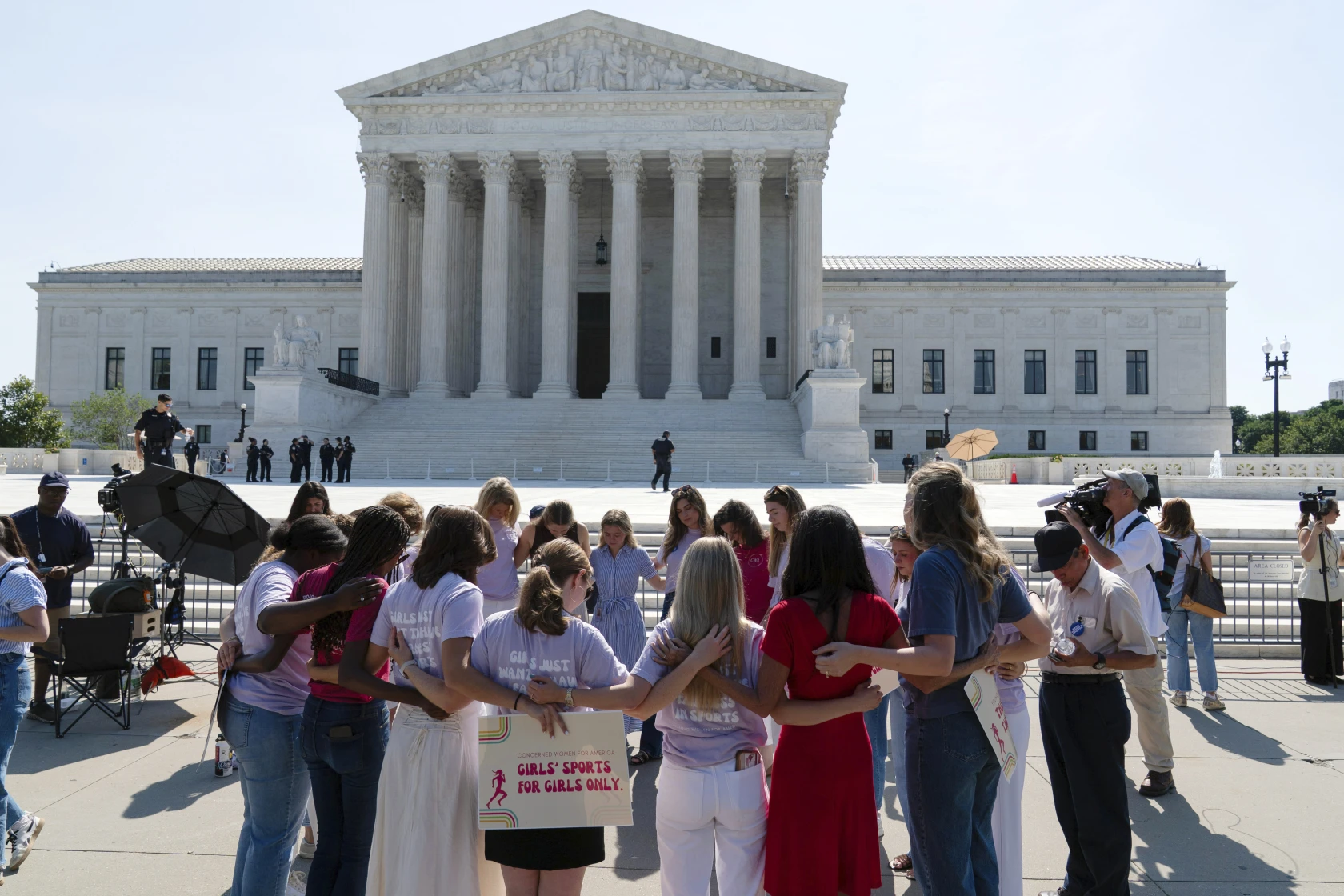
States can block transgender athletes from playing on teams that match their gender identity, the Supreme Court ruled in a 6-3 decision on Tuesday.
The closely watched decision upheld state laws in West Virginia and Idaho that prohibit trans girls and young women from playing on girls’ and women’s sports teams at publicly funded schools. In those states, the justices held, trans students must play on teams that match their gender assigned at birth.
The ruling does not mean that states like Illinois, where trans students are permitted to play on teams that match their gender identity, must change their policies.
“In Illinois, transgender students have the right to fully participate in school activities, including sports,” Attorney General Kwame Raoul said in a written statement. “Nothing in today’s opinion prohibits states like Illinois from allowing student athletes to participate on teams consistent with their gender identity and pursuant to [Illinois High School Association] guidelines.”
But the decision means similar bans in 25 other states — including nearby Indiana, Missouri and Iowa — are likely to withstand any future challenges. And while the number of trans student athletes affected by these bans is small, the decision adds fuel to the Trump administration’s ongoing attempts to prevent trans women from playing women’s sports, and to more broadly restrict the rights of trans people across the country.
In a statement, Education Secretary Linda McMahon called the ruling a “tremendous victory” and said her department will work to ensure “that every educational institution in America abides by the law of the land.”
Civil rights lawyers and advocates stressed that the text of the ruling is narrow and should not prevent states from making their own decisions about whether trans girls can play on girls’ sports teams. They also said the ruling shouldn’t be applied more broadly to how trans students are treated at school.
“The court says states may exclude trans girls from sports, it did not say they must,” Channyn Lynne Parker, the CEO of Equality Illinois, which lobbies for LGBTQ+ rights across the state, told WBEZ’s Say More. “Nothing here forces Illinois to change. … Our kids can still play. That is the law here, today.”
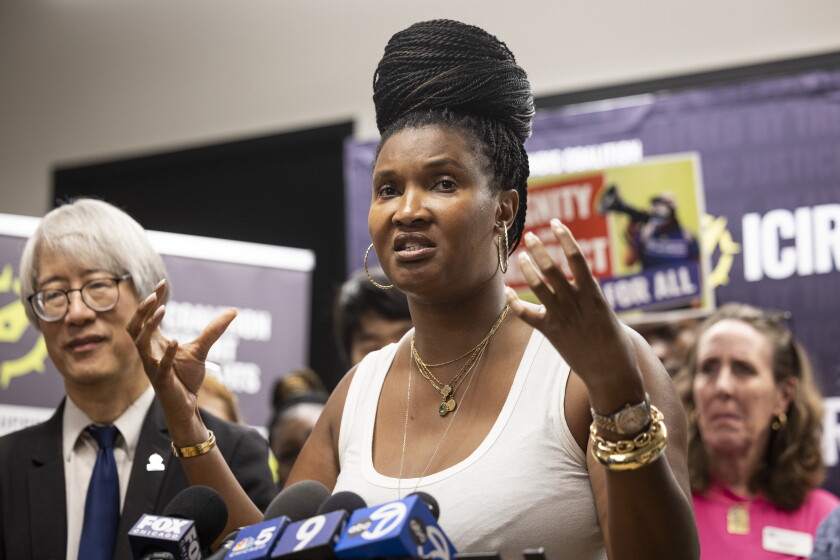
Asher McMaher, the executive director for Trans Up Front Illinois, which advocates for trans rights, said although the ruling doesn’t directly impact student athletes in Illinois, “it’s still heartbreaking” for those in states that do have bans.
“This decision is still telling trans athletes around the country that you are not welcome,” McMaher said. “These rulings don’t just impact policy and legislation, it emboldens people to hate and to hate out loud.”
For 18-year-old Ellison Gaines, a basketball player and recent graduate of north suburban Round Lake High School, the decision is a reminder that trans kids like him aren’t afforded the same opportunities as their cisgender peers.
“It’s not [about] the bathrooms, it’s not the sports, it’s attacking trans people,” Gaines said.
Majority of justices say state bans don’t violate trans students’ rights
Writing for the majority, Justice Brett Kavanaugh said the state bans do not violate students’ constitutional right to equal protection or Title IX, the federal civil rights law that bans sex discrimination in educational settings.
Title IX, he wrote, protects student athletes from discrimination based on the sex they were assigned at birth, not their gender identity — an interpretation that top education officials in the Trump administration have also sought to advance.
Kavanaugh said it was “reasonable” for states to divide sports teams based on the sex athletes were assigned at birth. “Given the inherent physical differences between the sexes,” he wrote, that kind of separation “can reduce the risk of physical injury and ensure fair competition.”
In her dissent, Justice Sonia Sotomayor, joined by Justices Elena Kagan and Ketanji Brown Jackson, agreed that Title IX had not been violated, but she said one of the students’ equal protection claims under the 14th Amendment of the Constitution should be returned to a lower court for further evaluation.
Sotomayor pointed to many unresolved questions around what constitutes competitive fairness and safety in school sports, including how puberty blockers, hormones and other gender-affirming care affects athletic performance.
“This litigation implicates deeply sensitive, contentious, and evolving issues,” she wrote. “These circumstances demand exercising judicial restraint, not rushing to answer conclusively difficult questions without sufficient evidentiary development. In opting otherwise, the majority extends great sympathy to those it favors: the young cisgender girls and women who play sports.”
Since President Donald Trump issued an executive order in February 2025 aimed at preventing trans athletes from playing on girls’ and women’s sports teams, his administration has launched investigations into numerous school districts and state sports associations, pressuring them to stop allowing trans athletes to play on teams that match their gender identity by threatening to withhold federal funding.
https://33ce9f596ba5c8fbd43a60eb1226719f.safeframe.googlesyndication.com/safeframe/1-0-45/html/container.html
In the wake of that order, the Illinois High School Association said it would follow state law, which prohibits discrimination based on gender identity, and continue to allow trans athletes to play on sports teams that match their gender identity on a case-by-case basis in the series of competitions that lead to state championships.
The association, which oversees high school athletics in Illinois, estimates there are 25 trans athletes out of 133,000 statewide; about three or four are trans girls.
The Trump administration is currently investigating three dozen Illinois school districts, including a Chicago charter school operator, over how they handle trans student athlete participation and how they teach about gender identity.
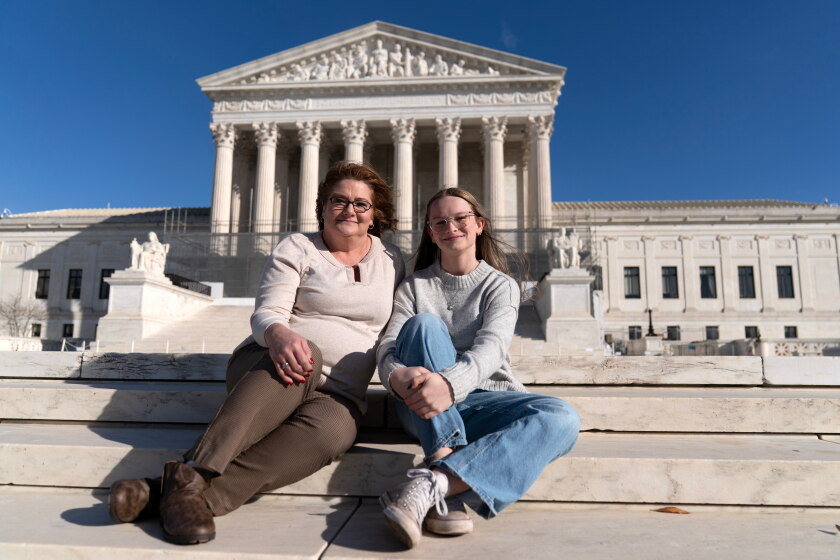
The ruling stemmed from two separate cases that reached the Supreme Court. In West Virginia v. B.P.J., a trans girl named Becky Pepper-Jackson challenged her state’s ban on trans girls playing girls’ sports in public high schools and colleges.
She alleged the law violated Title IX and her 14th Amendment right to equal protection under the law. With the state law on hold, she’s been allowed to compete in girls’ sports and has become a track and field standout in shot put and discus.
In Little v. Hecox, a trans student at Boise State University named Lindsay Hecox challenged Idaho’s law that barred trans athletes from playing on girls’ and women’s teams at public colleges and K-12 schools for similar reasons.
Hecox eventually stopped playing sports in Idaho and asked the court to drop her claim, citing personal struggles and negative attention from the case that she worried would derail her from graduating.
Some advocates for trans youth have pointed to Illinois’ system for determining eligibility as an example of how states can fairly allow trans athletes to compete.
But even with an affirming policy, it can be hard for trans youth to play on the team that matches their gender identity.
Gaines knows what that feels like. He moved with his family to Illinois from Texas in hopes of finding a more accepting environment for transgender people. Playing basketball gave him a reprieve from the stress and judgment he’s felt since he came out as trans at age 12.
He’s long advocated for trans rights, but in his senior year, he decided to join the girls’ basketball team at his Illinois high school to avoid conflict. He worried that even if the school administration had supported his right to join the boys’ team, it would have felt like “picking a fight” that he didn’t want to engage in at the time.
Coaches tried to be supportive, Gaines said, but eventually slipped back into calling out “Let’s go ladies!” and other gendered terms during games and practices. Gaines struggled to connect with the girls on the team. It was a “dysphoric” experience, he said.
He shuddered to think about the trans kids in more than half of all states who would now be forced to play on a team that doesn’t match their gender identity due to the Supreme Court’s ruling.
“It’s just gutting,” Gaines said.
Contributing: Violet Miller



Leave a Reply